

Women's Training Forum

Perspective from a mountain biker first:

What I love about mountain biking is that my mind is completely zoned in on handling the bike and I never realize how hard I am working. This is what sucked me into biking. It did not feel like training. It felt fun and challenging and took place in the woods filled with beauty and nature. ....the smell, the sun and wind on my skin are all things that make me feel alive. I do not know how much science there is to that, it just may be spiritual, but if it motivates me to be active then it is good.

What I learned is that to ride through real technical terrain, I needed to push a slightly harder gear and keep chain tension. This way I could comfortably ratchet my pedals around rocks and hitch my rear end over steps with one pedal stroke. High cadence caused flailing, and I became a masher right from the start.

When I started racing I always lost ground on long roads sections and climbs later in the race. I bought a road bike and dedicated one day each spring to spinning a faster and smoother gear.... training your limiters. I also rode a long road ride each week. This made a huge difference in my racing and climbing. I find that riding just one way is limiting, and it is good to mix it up and become well rounded. Technical riding should not be overlooked as well.
 
I think everyone essentially does do their own training because there is the perfect training program that the pros use and then there is life. If an athlete can't be flexible then they are destined for frustration and even failure when there are months of snow on the ground, sick people we need to care for or any manner of temporary disaster that can sideline our training.

If it's icy and we can't ride maybe we can ski or skate or do something indoors to keep fitness. If it's too cold to ride outside(and most people have some limit to temps) maybe swim or rock climb or do something else we can enjoy. It's all better than sitting on the couch.

I think it's great that we have this forum to help us find out what is the ideal training plan so we can see how much of it we can fit in our lives. Just because we can't be perfect does not mean we can't strive for our best.

I love your last posts RC, but time is very short for me lately. I'll comment when I get a chance.

Perspective from a mountain biker first:

What I love about mountain biking is that my mind is completely zoned in on handling the bike and I never realize how hard I am working. This is what sucked me into biking. It did not feel like training. It felt fun and challenging and took place in the woods filled with beauty and nature. ....the smell, the sun and wind on my skin are all things that make me feel alive. I do not know how much science there is to that, it just may be spiritual, but if it motivates me to be active then it is good.

What I learned is that to ride through real technical terrain, I needed to push a slightly harder gear and keep chain tension. This way I could comfortably ratchet my pedals around rocks and hitch my rear end over steps with one pedal stroke. High cadence caused flailing, and I became a masher right from the start.

When I started racing I always lost ground on long roads sections and climbs later in the race. I bought a road bike and dedicated one day each spring to spinning a faster and smoother gear.... training your limiters. I also rode a long road ride each week. This made a huge difference in my racing and climbing. I find that riding just one way is limiting, and it is good to mix it up and become well rounded. Technical riding should not be overlooked as well.

This is excellent, having two different views from two very accomplished women.
Cyclopath I agree that an athlete must "adjust" their training. I follow the training schedule that's been planned for me. However there are days when getting on the mountain bike would be great. One thing I've learned is being flexible during training. In Base Training period 1 of 3 cross training takes place 2 times per week in the first month. It could be snow shoeing, cross country skiing, trail running or hiking.

Pixy your post was great, I learned a few tips I never knew. I too found myself thinking during a mtb race ... "This is beautiful to be out here" in reference to the trees, sounds and nature in general.
 
I think this is all great info. The only thing I see missing right now is goal setting. You can't develop a true training plan without first setting your goals for the season and picking the races you are peaking for. Only then can you start developing your training plan. This is very important for you in setting out the different periods of training to bring you to that peak period in the best shape possible. RC and Pixy, keep the info coming. I don't know if any of you are familiar with the seven habits for highly effective people, but one of the habits is "begin with the end in mind" -I think that fits for setting up your training plan!
 
Last edited:
I think this is all great info. The only thing I see missing right now is goal setting. You can't develop a true training plan without first setting your goals for the season and picking the races you are peaking for. Only then can you start developing your training plan. This is very important for you in setting out the different periods of training to bring you to that peak period in the best shape possible. RC and Pixy, keep the info coming. I don't know if any of you are familiar with the seven habits for highly effective people, but one of the habits is "begin with the end in mind" -I think that fits for setting up your training plan!


Thank you for the post Kathi, with your background it would be awesome if you could share your views. The "seven habits" sounds interesting.
Good point on setting goals for the season, I want to dedicate time to that.
Ideas and suggestions could greatly help this forum.
 
Last edited:
Powerful Information
You can't develop a true training plan without first setting your goals for the season and picking the races you are peaking for. Only then can you start developing your training plan. This is very important for you in setting out the different periods of training to bring you to that peak period in the best shape possible.

Setting goals for the upcoming season is very important as Kathi points out.
I think it is equally vital for the beginner racer as well as the advanced athlete. Setting a lofty goal that may be insurmountable could bring disappointment to your season.

Keeping it real ... If your goal is to do your first century (100 mile ride) than your training plan needs to target that goal. Simply riding your bike for 15 miles 3 times per week will not let you achieve this. Building a solid foundation in the Base periods is key. Designing your training plan will allow you to Peak hopefully at the right time.
The Mountain biker also needs to correctly plan their training program to include high intensity training. There will be plenty of time for specific training once the Base is complete.

OK, Do I really need a coach? In my opinion depending on the your goals you can put together a training plan that will allow you to focus on your own goals for the season as Kathi K pointed out. It's your goals that will dictate your training.
Why do you need a coach? During the season if I have a bad race, my first thought is to train harder ... "I need longer interval sessions, I know, I'll do a 3 day max effort block this week!" The truth is implementing such a plan could make matters worse. Having a personal coach that will review my training data might suggest an off week rather than more intensity. This year I followed a few online training plans and noticed significant improvement. Next year I have set higher goals for myself and having a coach will help me reach them.

Help in determining goals Goals can also be viewed as Priority races, meaning outline which events are your target for the season. The racing season can be broken down into categories A & B, "A" would stand for Priority.
When I read about this topic a few years ago, my thought was ... "To me, every race is a priority". Choosing your most important events first will help design a more balanced training plan.
 
Last edited:
Been enjoying the reading here...I lean more towards just loving the Mt. biking and being outdoors aspect too. I want to be strong enough to hang in with the cat 2 races, enjoy my life, work, take care of kids and home, and be healthy. I've had a slump that I'm coming out of now. I've joined the gym for the winter months and will surely get out to ride when it's not frigid out. I wish I could have a more intense training plan, but that is it for now....
I know I'll also learn some useful tips here that will help me. Thanks.🙂
 
I want to thank you gals for taking the time to write all this up for our benefit. I find that if I focus too much on my heart rate, breathing, weight loss and the general health benefits, I get frustrated and want to give up. For me, the biggest motivation is just having fun and being out in the woods on my bike. I am slightly competitive, so sometimes accomplishing a goal (such as climbing a technical section) has more to do with improving my own skills to either beat myself or at least beat Justin (coworker). To follow an "official" training schedule may make it seem more like work then play for me. I have a hard time with the "have to" train as opposed to "want to" RIDE.
 
I want to thank you gals for taking the time to write all this up for our benefit. I find that if I focus too much on my heart rate, breathing, weight loss and the general health benefits, I get frustrated and want to give up. For me, the biggest motivation is just having fun and being out in the woods on my bike. I am slightly competitive, so sometimes accomplishing a goal (such as climbing a technical section) has more to do with improving my own skills to either beat myself or at least beat Justin (coworker). To follow an "official" training schedule may make it seem more like work then play for me. I have a hard time with the "have to" train as opposed to "want to" RIDE.

This is a very good point. While some people will benefit from training, goals and the pressure to make them do it, others thrive on fun and no pressure. I am a no pressure person myself. Either way, training and realistic goals can be worked in as fun or work, what ever makes you ride more.
 
Premise explained.

I want to thank you gals for taking the time to write all this up for our benefit. I find that if I focus too much on my heart rate, breathing, weight loss and the general health benefits, I get frustrated and want to give up. For me, the biggest motivation is just having fun and being out in the woods on my bike. I am slightly competitive, so sometimes accomplishing a goal (such as climbing a technical section) has more to do with improving my own skills to either beat myself or at least beat Justin (coworker). To follow an "official" training schedule may make it seem more like work then play for me. I have a hard time with the "have to" train as opposed to "want to" RIDE.

Thank you for posting your thoughts. Arwen's Mom has explained the premise not only for training but my underlying reasoning and concept for this forum. From the beginning I knew that most if not all of the readers would not completely follow an in-depth applied training plan. My feeling were most could take valuable segments of the Women's Training Forum and implement them into their own training. If I would have simply posted a training blog for the average part time racer than I might have excluded someone who has made the commitment to dedicate time and focus to training.
To follow an "official" training schedule may make it seem more like work then play for me.
Full dedication towards training that has been discussed in the Women's Training Forum is a full time job; at times I dislike it more than a regular paid job. It all depends on your goals and the effort you are willing to put into it.

Next up:
Two weeks from today will be the official start for the 2012 season. Today I will post workouts for the Base Training period 1. It's time to get back on the bike.
 
Perspective from a mountain biker first:

What I love about mountain biking is that my mind is completely zoned in on handling the bike and I never realize how hard I am working. This is what sucked me into biking. It did not feel like training. It felt fun and challenging and took place in the woods filled with beauty and nature. ....the smell, the sun and wind on my skin are all things that make me feel alive. I do not know how much science there is to that, it just may be spiritual, but if it motivates me to be active then it is good.

What I learned is that to ride through real technical terrain, I needed to push a slightly harder gear and keep chain tension. This way I could comfortably ratchet my pedals around rocks and hitch my rear end over steps with one pedal stroke. High cadence caused flailing, and I became a masher right from the start.

When I started racing I always lost ground on long roads sections and climbs later in the race. I bought a road bike and dedicated one day each spring to spinning a faster and smoother gear.... training your limiters. I also rode a long road ride each week. This made a huge difference in my racing and climbing. I find that riding just one way is limiting, and it is good to mix it up and become well rounded. Technical riding should not be overlooked as well.

i totally relate to this post. i can spend 2 hours on the mtb pushing up hills and getting through techy sections all the while having this blissful feeling of yay! the entire time because i am in the woods. i can NEVER replicate that on a spin bike, after 20 mins i get bored and then the workout is so mentally challenging that 1 torturous hour is enough. i dont nearly work as hard as on my real bike. i do have a road bike though and after reading pixy's story i realize i have the same issue: i do well on techy stuff and then lose people on long climbs. i need to get out on that bike and maybe i can improve too! thanks again this thread is full of great info.
 
Last edited:
Another great training incentive is having a friend to ride with. I love riding with the girls ! Alex-- We will work on those hills !!😛
 
The Base period has also been described as being like an Egyptian pyramid: The broader the base of the pyramid, the higher the peak that can be built on it. *by Joe Friel from his training blog*

Training Overview: Base Period 1

Monday
Time: 1:00:00
Weight Training:
10 minute Warm up on trainer, 3-4 sets of strength exercises consisting of but not limited too:
Leg press, leg extensions, leg curls, calf raises, bench press, rows and crunches. Cool down 10-15 minutes of easy spinning on the trainer.

Tuesday:
Time 45:00:00
Isolated Leg Workout

Wednesday
Time 45:00:00
Cross-Training:

Thursday:
Weight training: Same as Monday

Friday:
Time 45:00:00
Spin up drill

Saturday:
Time: 1:30:00
Cross-Training

Sunday:
Time: 2:00:00
Easy ride

This is the Base Training Period for January.
RC's Edit: Refrain from going into the red zone during Base Periods 1&2.
 
Last edited:
Training Overview: Base Period 1

Monday
Time: 1:00:00
Weight Training:
10 minute Warm up on trainer, 3-4 sets of strength exercises consisting of but not limited too:
Leg press, leg extensions, leg curls, calf raises, bench press, rows and crunches. Cool down 10-15 minutes of easy spinning on the trainer.

Tuesday:
Time 45:00:00
Isolated Leg Workout

Wednesday
Time 45:00:00
Cross-Training:

Thursday:
Weight training: Same as Monday

Friday:
Time 45:00:00
Spin up drill

Saturday:
Time: 1:30:00
Cross-Training

Sunday:
Time: 2:00:00
Easy ride

This is the Base Training Period for January.
RC's Edit: Refrain from going into the red zone during Base Periods 1&2.

This is a great post RC. The examples and links you included explain things really well.

Another great training incentive is having a friend to ride with. I love riding with the girls ! Alex-- We will work on those hills !!😛

You beat me to it ... this was going to be my next post: I have done many long rides in winter with friends and it can be a really fun way to get in some base miles. My teammate Tara used to sing songs while we were riding. Even being lost on one of ryder-x's 70 mile/7000 ft of climbing road rides in sub freezing temps can be fun when singing songs with friends. 😀

During my winter base period, I will try to do one weekly longer ride at an aerobic pace, not race pace. I like to include long (over a mile) hills on my road rides and stay seated. This keeps my heart rate lower and develops leg strength. If I am riding with faster riders, I will let them go and stay within my limits. Finding closely matched friends to ride with makes this much easier. You can go explore big hills and see some sights along the way. In the winter there is much to see with leaves down: ice flows, scenic overlooks, pileated woodpeckers and icy rivers are a few. Base can be done on a mountain bike or the trainer as well. I just find there are too many stops on a technical mountain bike ride and the trainer can be mind numbing after 30 minutes. Everyone is different, so I am always a big fan of "do what works for you."
 
This is a great post RC. The examples and links you included explain things really well.


You beat me to it ... this was going to be my next post: I have done many long rides in winter with friends and it can be a really fun way to get in some base miles. My teammate Tara used to sing songs while we were riding. Even being lost on one of ryder-x's 70 mile/7000 ft of climbing road rides in sub freezing temps can be fun when singing songs with friends. 😀

During my winter base period, I will try to do one weekly longer ride at an aerobic pace, not race pace. I like to include long (over a mile) hills on my road rides and stay seated. This keeps my heart rate lower and develops leg strength. If I am riding with faster riders, I will let them go and stay within my limits. Finding closely matched friends to ride with makes this much easier. You can go explore big hills and see some sights along the way. In the winter there is much to see with leaves down: ice flows, scenic overlooks, pileated woodpeckers and icy rivers are a few. Base can be done on a mountain bike or the trainer as well. I just find there are too many stops on a technical mountain bike ride and the trainer can be mind numbing after 30 minutes. Everyone is different, so I am always a big fan of "do what works for you."

I definitely need to get into a schedule with my training. I would like to take one weekend day to do a long road ride and the other to get on the mtn bike and work on my skills during the ride. Riding with others ALWAYS makes it much more bearable so please post when doing rides so I can join in as well as others 🙂
 
I definitely need to get into a schedule with my training. I would like to take one weekend day to do a long road ride and the other to get on the mtn bike and work on my skills during the ride. Riding with others ALWAYS makes it much more bearable so please post when doing rides so I can join in as well as others 🙂

A few more points on Base training. Regardless of your fitness level or your cycling discipline, base training is the most important phase of training for the year, and this is not my opinion. It's the foundation for which to build upon. Last year towards the end of my own 2 month base training period I was able to do 4 hour plus rides 2 times per week. In respect to shedding a few pounds, it's a fact that cycling in heart rate zone 2 burns the most calories of all the training zones. Base is mostly zone 2 as the chart shows below.
6a0120a92f5af5970b0162fd17a6a7970d-800wi
 
Last edited:
Training Limiters

Something everyone has in common in cycling are limiters or weaknesses. If you have trouble with technical rocky mountain bike sections, but spend your time riding fast smooth courses chances are you will still loose time when the race course turns more technical. The focus needs to be Train your weaknesses, race your strengths.
I have read a few posts here on the Women's Training Forum where climbing seems to be the main limiter, I know it's mine. My trouble in regards to climbing is Power to weight ratio, in more simple terms I have to much weight and not enough power. The bad news is you might get dropped on a long climb if your competitor is much lighter than you, the good news is you can gain more power. Weight training during the Base period can make a difference in climbing. More insight on Power and Weight from Joe Friel. If your mountain bike weighs 28 pounds see if there are ways to lighten the load, that can make a difference too.
10840_680707004.jpg

Training the limiter
Get out and ride the hills. Early this year towards the end of my base training
period hill repeats were introduced. An overview to this workout would be
to find a few hundred yard steady climb either on the road or off road that has a grade percentage between 6%-8%, while seated, choose a lower gear that would allow you not to go anaerobic (red zone). If the ascent takes you 5 minutes, than let the roll down take 5 minutes as well. Repeat 4-6 times and try not to go out too hard so your able to finish the session. This workout is good for building Muscular Force which will help your climbing.
6a0120a92f5af5970b0153907c967b970b-320wi

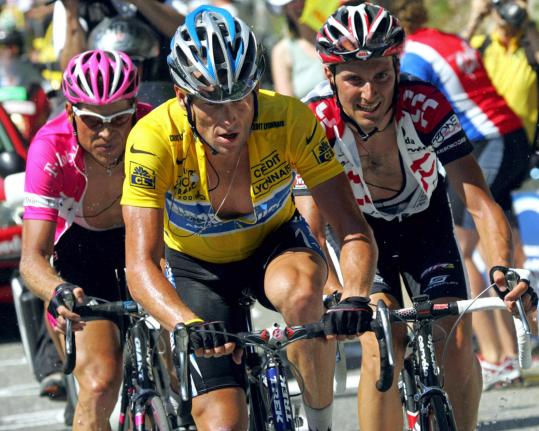
Lance ...
539w.jpg

I hope you find this information helpful.
 
Last edited:
Such great stuff!

I think i struggle with weight vs power so increasing power is something I should really focus on. Thanks for the exercise descriptions, I will try to work something like that for myself.

Riding with friends is the best! I too would love to have some rides this winter with the ladies. I don't know the good roads in NJ that have the hills as described. Here in NY, you'd get hit by a delivery truck if you attempted hill repeats!

A place I like to practice tech riding is Sourlands. Its small so you can't get lost, no hunting or bears, has no real killer hills but the ROCKS are something else. Gardens, rollers, pop ups, roots, little bridges, and drops (which I don't do).

Happy Holiday week!
 
All this info makes it so complicated for a simple girl like me. Zones and heartrates and such. Maybe I need to hang with you and you do all the thinking and I will just ride and follow your lead. So, coach, when do you wanna meet? I am more of a morning rider and am available any day except wed. or sun.
 
A place I like to practice tech riding is Sourlands. Its small so you can't get lost, no hunting or bears, has no real killer hills but the ROCKS are something else. Gardens, rollers, pop ups, roots, little bridges, and drops (which I don't do).

Happy Holiday week!

Sourlands is 10 minutes down the road from me...let's make a date to ride there! (I've never been riding only hiking there).
 
All this info makes it so complicated for a simple girl like me...
My new favorite quote!🙂

If the numbers make your head spin just ignore the data, put on a smile and go for a ride. If you want the results without doing all the planning, hire a coach who will sculpt a program for you and fine tune your workouts.
It's all good.

Burning Fat

Working in zone 2 burns a larger percentage of calories from fat. But working in higher zones at a higher intensity burns more calories per hour. So even though your percentage of calories from fat is lower in zone 5, you still burn more calories per hour from fat. The limiter becomes how long you can sustain exercise in any of those zones. Obviously, you can work in zone 2 a heck of a lot longer than zone 5.

You can't prove any of that by me so here are a few links:

http://exercise.about.com/od/weightloss/a/The-Truth-About-The-Fat-Burning-Zone.htm

http://www.active.com/triathlon/Articles/The-Myth-of-the-Fat-burning-Zone.htm

http://www.thewalkingsite.com/thr.html
 
Back
Top Bottom